Why and Where Physics-Machine Learning Integration Matters for Hydrology and Earth Sciences
Join Zoom Meeting
Join this presentation In-Person: BEG Building 130, VR Room 1.116C Or Via Zoom
Meeting ID: 932 0137 7630
Passcode: 013011
Presenter
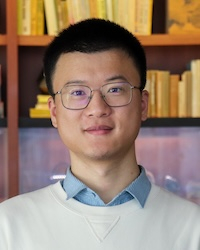
Dapeng Feng, Ph.D.
Assistant Professor
Dept. of Earth and Planetary Sciences
Jackson School of Geosciences
The University of Texas at Austin
Description
In this talk, I will discuss why and where integrating physical laws with machine learning (ML) models remains essential for improved simulation and understanding of hydrologic systems, despite the strong performance achieved by purely ML models. Many limitations of data-driven ML arise from data limitations, while our observations are imbalanced across space and different physical processes. We need the strong ability to characterize not only “big-data”, but also “small-data” processes. Integrating physical constraints enhances the generalizability of models to data-scare regions, non-stationary processes and extreme hydrologic events. Physical integration also allows direct observations to be propagated to constrain internal relationships between hydrologic components with sparse data, to reveal the functions and feedbacks within the system. Lastly, this integration can help us better understand and use novel observations and interpret the physical meanings of “proxy” observations. ML and physical models are not divergent but complimentary pathways for understanding hydrologic processes. The systematic integration toward next-generation models is promising to improve both modeling capability and process understanding across scales.