Texas-Louisiana Carbon Management Community
May 15, 2026
1) What is the specific problem this research addresses?
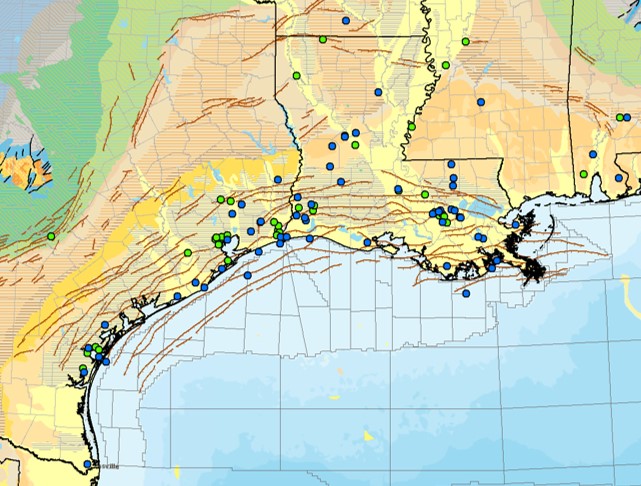
Between 2022 and 2023, approximately 50 carbon capture and storage (CCS) projects were announced along the Texas and Louisiana Gulf Coast in the United States. While injecting CO₂ into the subsurface for enhanced oil recovery has been practiced for decades, the broader application of CCS for climate mitigation is less familiar to many communities. As CCS projects expand, communities where projects are proposed need clear, reliable information about this technology—what it is, how it works, and what these projects mean for their region.
In response, the Texas-Louisiana Carbon Management Community (TXLA CMC) was initiated to bring together researchers to listen to stakeholder questions and provide accurate, science-based information about CCS. This research program engages a wide range of stakeholders—including local communities, educators, policymakers, and industry—to better understand information needs and to develop educational resources and engagement strategies that help address those questions.
2) Why is researching this problem important?
The rapid growth of CCS projects across the Gulf Coast has created a critical need for accessible, credible information about the technology and its environmental monitoring, regulatory, and operational aspects. TXLA CMC focuses on Texas and Louisiana, but this program may serve as a future model for how other regions may support informed dialogue around emerging energy technologies.
As part of this effort, TXLA CMC established a six-university consortium that includes CCS researchers from:
- The University of Texas at Austin
- Texas A&M University–Kingsville
- Texas A&M University–Corpus Christi
- University of Houston
- Lamar University
- Louisiana State University
Together, these institutions serve as a network of trusted scientific resources that can engage with stakeholders—including state and local government officials, workers, landowner organizations, community groups, trade associations, environmental organizations, and local residents—and provide unbiased, science-based information about CCS.
3) What value will research findings have in terms of furthering related or future research?
The TXLA CMC research program is helping by building a community of educators, researchers, and stakeholders who understand CCS science and can communicate it effectively in regions where projects are being developed. Through partnerships with teachers, engagement with local communities, and collaboration across universities, the program is creating a network of trusted sources who can explain CCS concepts, environmental monitoring approaches, and regulatory processes in ways that are accessible and relevant to local audiences. These efforts help ensure that accurate scientific information is available as CCS projects expand across the U.S. Gulf Coast region.
Research conducted through TXLA CMC also contributes to the development of environmental monitoring approaches relevant to carbon management systems. For example, Research Professor Katherine Romanak’s ongoing research examines the causes of natural variability in carbon dioxide and methane concentrations in coastal wetland environments in order to understand background conditions and improve monitoring strategies for subsurface carbon storage projects.
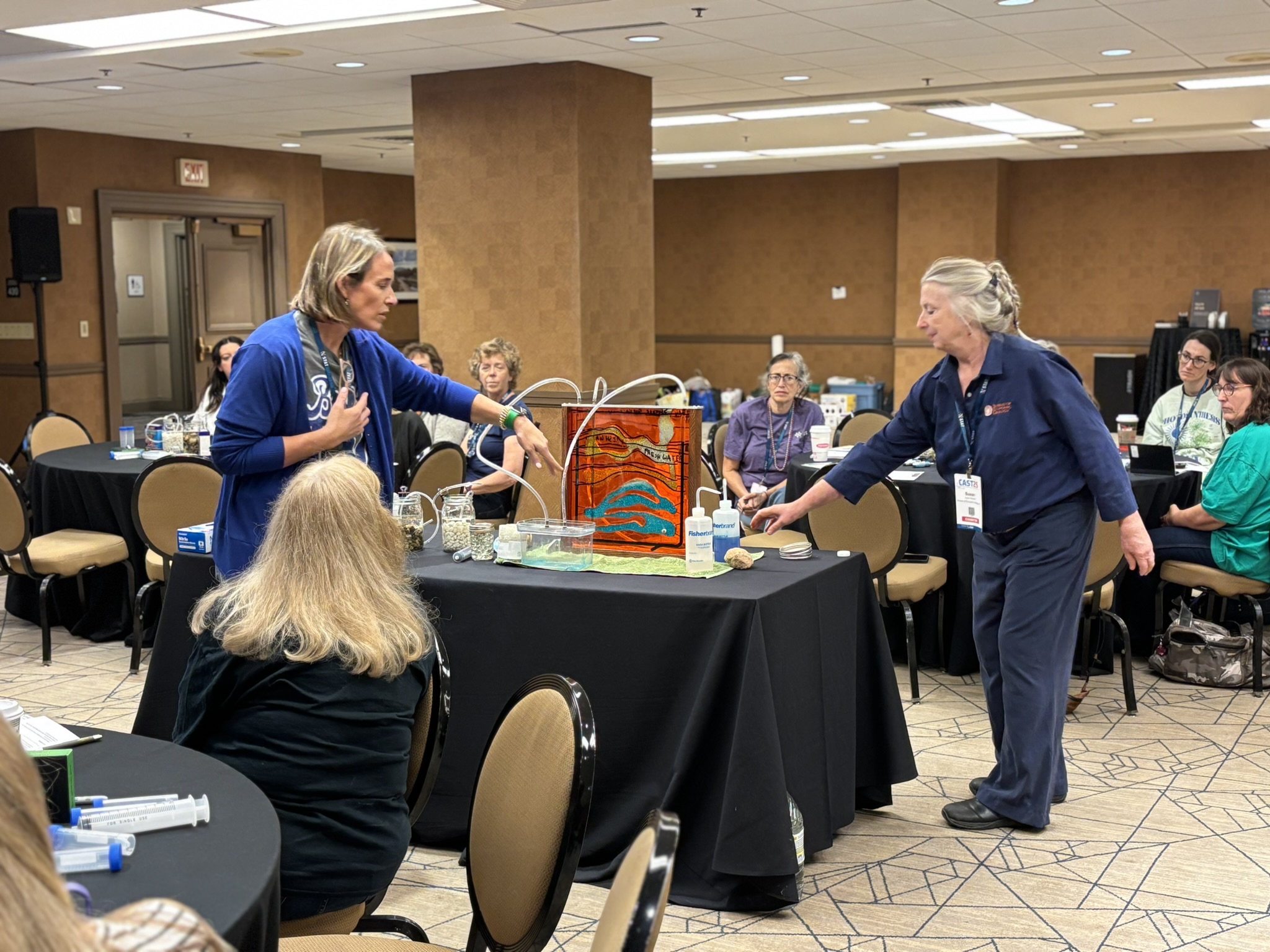
In addition, educational demonstrations and student mentoring activities developed through this program provide opportunities to test hands-on approaches for teaching groundwater monitoring, environmental measurement, and subsurface science processes. These efforts contribute to research on STEM education and science communication in the context of emerging energy technologies.
4) What value will research findings have in terms of benefiting society in general?
By providing accurate information and educational resources about CCS, TXLA CMC helps communities, educators, and policymakers better understand an emerging technology that will play a role in future energy and climate strategies. This program supports informed public dialogue by connecting stakeholders with scientists who can explain the technical, environmental, and regulatory aspects of CCS.
Outreach and educational materials developed through the program and summarized at put-it-back.org introduce students to concepts in geoscience, environmental monitoring, and energy systems, while also providing teachers with resources aligned with state curricula. These efforts contribute to building a future workforce that is better prepared to engage with complex environmental and energy challenges.
5) What (if any) unique approaches, processes, or technologies are being employed in this research?
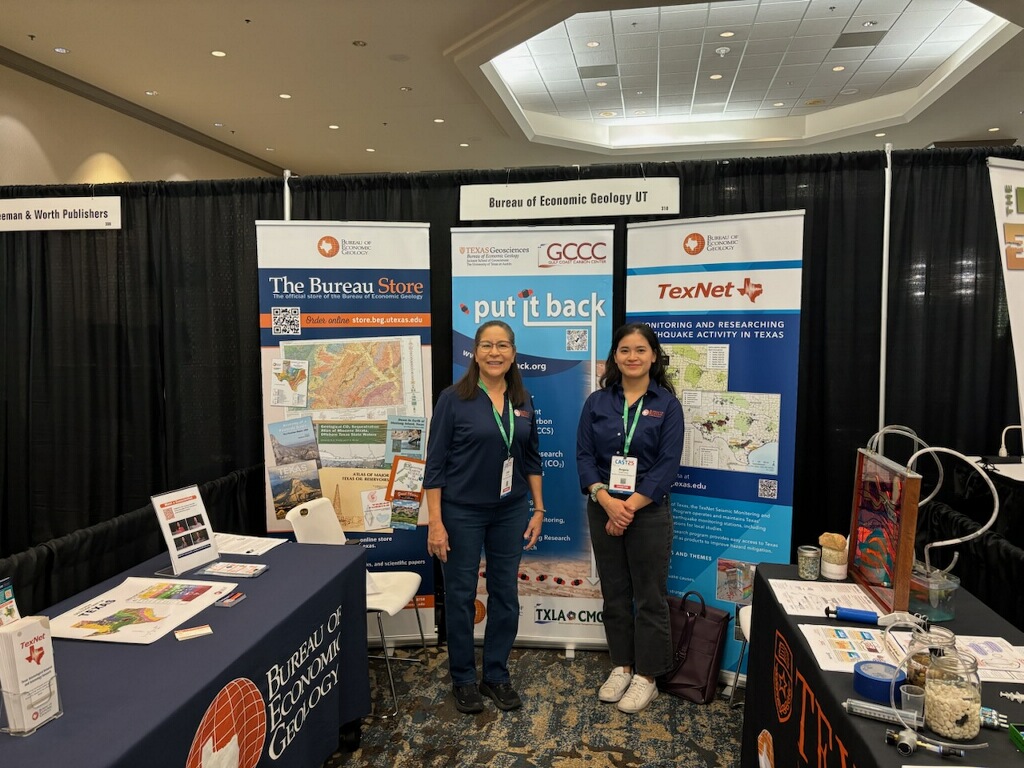
TXLA CMC combines scientific expertise, education, and stakeholder engagement to develop practical approaches for communicating CCS concepts. The program hosted two multi-day workshops in 2024 and 2025 that brought together CCS researchers and grades 6–12 STEM teachers to co-develop classroom materials aligned with state curriculum standards such as the Texas Essential Knowledge and Skills (TEKS).
Participating educators—known as the Carbon-not Ambassadors—worked with researchers to design classroom activities and teaching materials that introduce students to carbon management concepts, subsurface science, and environmental monitoring. These materials are available online at put-it-back.org.
Additional program activities include student mentoring initiatives, hands-on groundwater monitoring demonstrations for educators, and collaborative efforts to develop educational modules that explain how environmental monitoring systems detect and interpret signals in the subsurface.
6) What related publications or information resources of importance are available regarding this area of research?
Early on, the Carbon-not Ambassadors requested a CCS comic book to help middle school students understand the CCS process. A team at UT Austin’s Bureau of Economic Geology created a comic book that serves as a great CCS resource for the public, and is available to access and download online for free or to purchase for communities near active CCS projects:
van der Kolk, D. A., Mastrangelo, F. M., Hovorka, S. D., Tran, V. H., and Luciano, A. K., 2025, Carbon-nots to the Rescue! The University of Texas at Austin, Bureau of Economic Geology, CB2025, 12 p. https://doi.org/10.23867/CB2025
The Carbon-not Ambassadors have also been showcased on the Jackson School of Geosciences news page, which was distributed by several news agencies and further showcased on the Texas Standard (including Houston Public Media).
Additional educational resources developed by TXLA CMC are available at: put-it-back.org.
Name of Research Program or IA: Texas-Louisiana Carbon Management Community (TXLA CMC), hosted by the Gulf Coast Carbon Center
Date of project start: September 1, 2024
Term of project: August 31, 2026
Project PI: Sue Hovorka
Other key personnel: Angela Luciano, Katherine Romanak, Dolores van der Kolk, Francine Mastrangelo, Valerie Tran, Linda McCall
Principal information contact: Angela Luciano
Email: angela.luciano@beg.utexas.edu
Funding source(s): Department of Energy’s National Energy Technology Laboratory (DOENETL) project DEFE32361
Geographic area(s) of study: Texas & Louisiana, USA
General discipline(s) of study: Carbon capture and storage (CCS) or carbon capture, utilization, and storage (CCUS)
Keywords: Carbon capture and storage (CCS), CCS education, environmental monitoring, STEM education, STEAM education, carbon management, science communication, Gulf Coast energy transition