
Produced Oil Geochemistry and Key Controls to Oil Quality Heterogeneity in the Delaware Basin
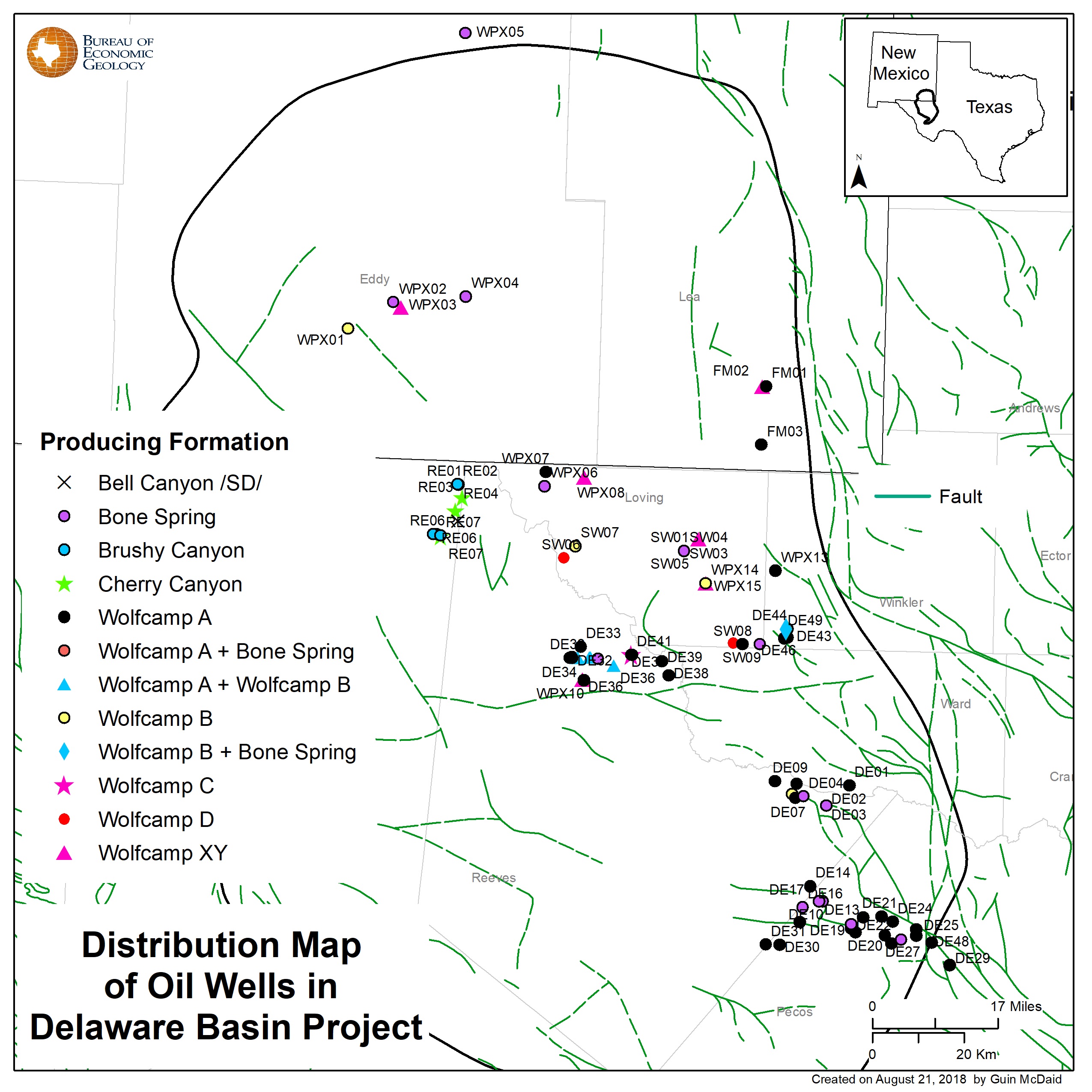
The Delaware Basin is a multi-source, multi-layered petroleum system. Therefore, it is critical to identify its single-source production wells and collect representative samples to investigate the following areas of study:
- the contribution of oil mixing from different sources in production
- the controls to crude quality heterogeneity, including thermal maturity and organofacies variation
- the paths and timing of oil migration
- changes in oil composition throughout production and indications predicting production decline
The Bureau of Economic Geology is conducting a sampling program that gathers 1-gallon samples from 100 Delaware Basin wells spanning a wide geologic range. The Bureau is also conducting a time-series sampling program that measures oil production time from 1 to 2 wells representative of different production times from the Bone Springs and Wolfcamp Formations. The 2-year-long research project benefits from industry funding and joint collaboration with seven operators who have provided crude oil samples from their own acreages.
This study will measure the geochemical fingerprints and physical properties of the crude oil samples. Our goal is to deliver an interpretation of spatial heterogeneity for Bone Springs and Wolfcamp crude and the key geochemical controls on a basin-wide scale. This study can identify value-added properties based on crude type and potentially enhance the value of operators’ product.

