
A Second Life for Wells in the Midland Basin
Dr. Sheng Peng’s lab at the Bureau looks a bit like an inventor’s workshop, with wires and tubing snaking through experimental setups housed in clear cabinets. Rock samples from the field are laid out on a nearby table. “I’ve put together basically everything in here and written all the code. This isn’t stuff that you can just purchase off the shelf,” Peng says. The equipment is for testing a variety of things from nano-Darcy level permeability to carbon dioxide for enhanced oil recovery (CO2-EOR). By injecting CO2 into rocks, the CO2 can mix with oil, freeing it from tight pore spaces so it can flow to the well.
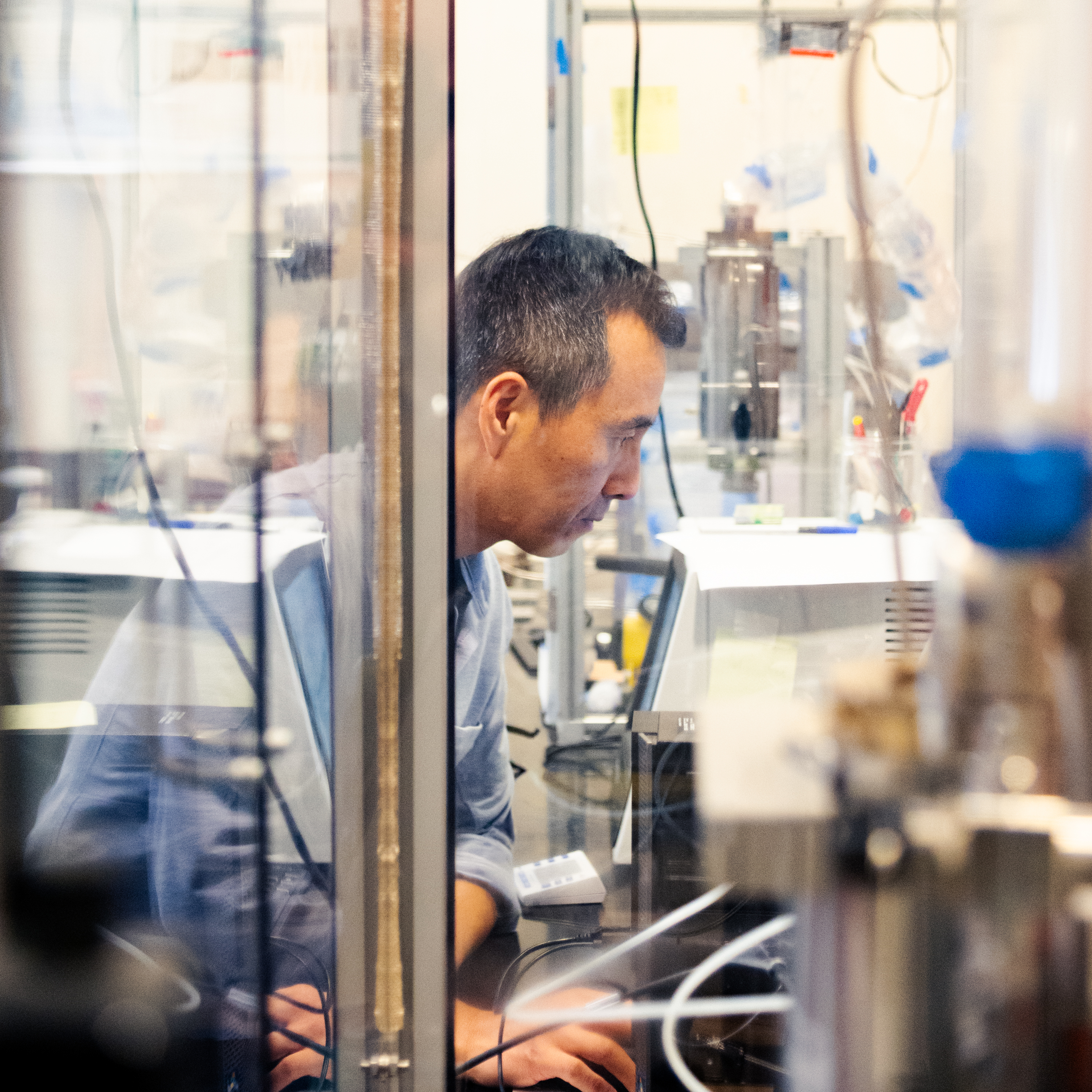
A recent $11.6 million DOE award, involving the Bureau and other academic and industry partners, is taking those lab experiments to the field. Research will focus on developing and evaluating strategies for injection and monitoring in an unconventional reservoir in the Midland Basin. Many wells in the area are beginning to decline in production or reach levels that are no longer economically feasible. Extending the life of these wells could preserve jobs and income, while potentially reducing atmospheric carbon dioxide.
CO2-EOR has been studied for years, but there has been little field activity in unconventional rocks. Some of this is due to the difficulty of accessing an adequate CO2 source or pipeline, but much of it stems from a lack of understanding of how the process will behave in these rocks. As Peng says, “There are still research questions to answer, and there is always a gap between what we see in the lab and what happens in the field.”
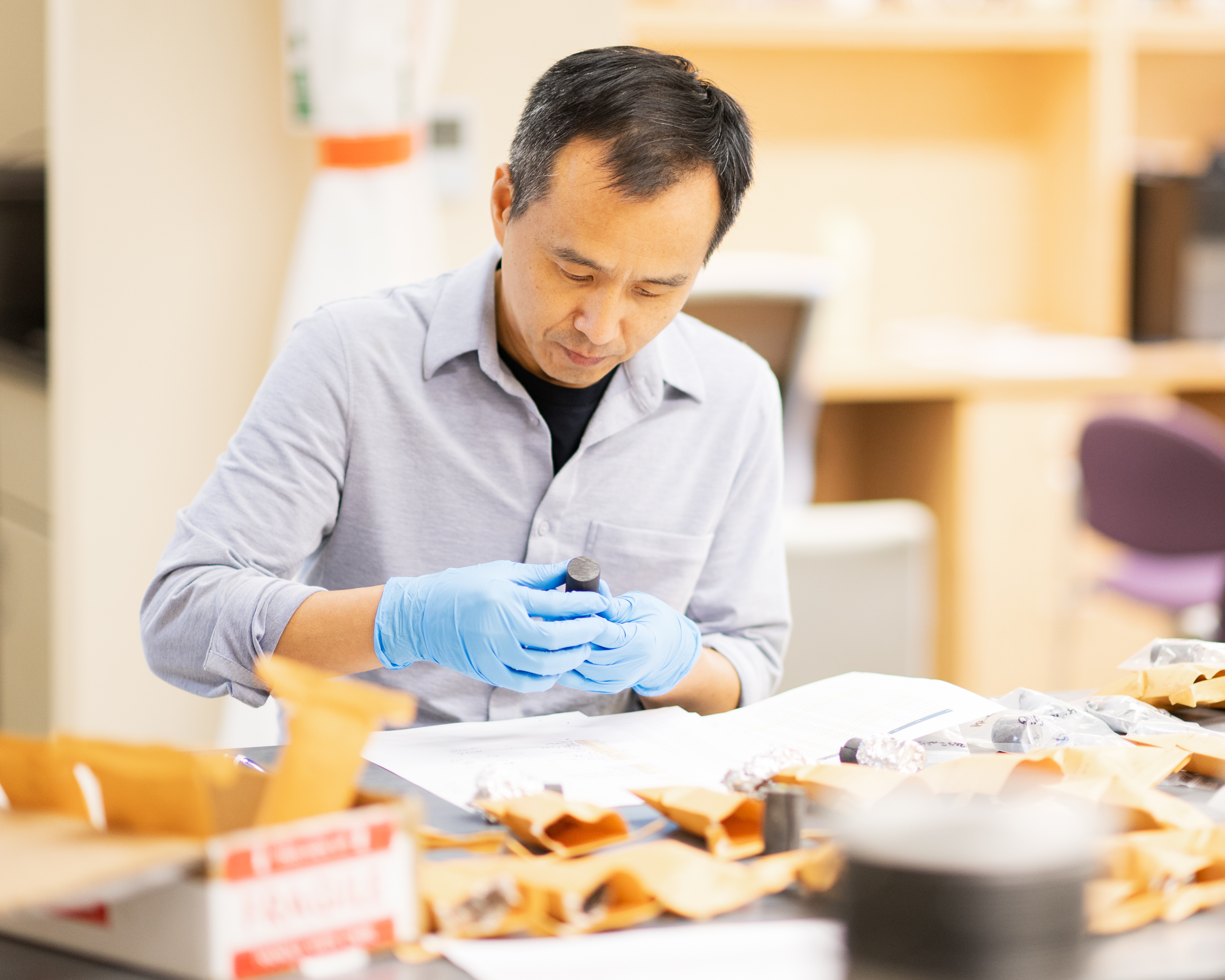
Preliminary lab experiments show that not every rock responds the same to CO2-EOR. Different shales injected with the same fluid in the lab have recovered as low as 8% of oil and some as high as 54%. Peng adds that complexity in the subsurface complicates real world use. “Fractures may act like a highway for the CO2; they can short-circuit and bypass the matrix. So you have no problems injecting the CO2, but you don’t get any additional oil recovery.”
“The pilot will be a good starting point, with some controlled conditions, to see how well it goes,” Peng says. The team is also working to build a broader industry consortium around the project, and has already drawn interest from companies with field experience in CO2-EOR. The results of the pilot could help operators across the Permian Basin decide where the technology makes sense, and where it doesn’t.

