
Bringing Groundwater Science to Texas Water Day
Flowing dye through a groundwater model, Bureau researchers demonstrated how water moves underground to over 200 visitors at the Bullock Texas State History Museum during Texas Water Day on September 6. In total, more than 2,000 people attended the event, which also featured participation from the City of Austin, the Colorado River Alliance, and various community groups.
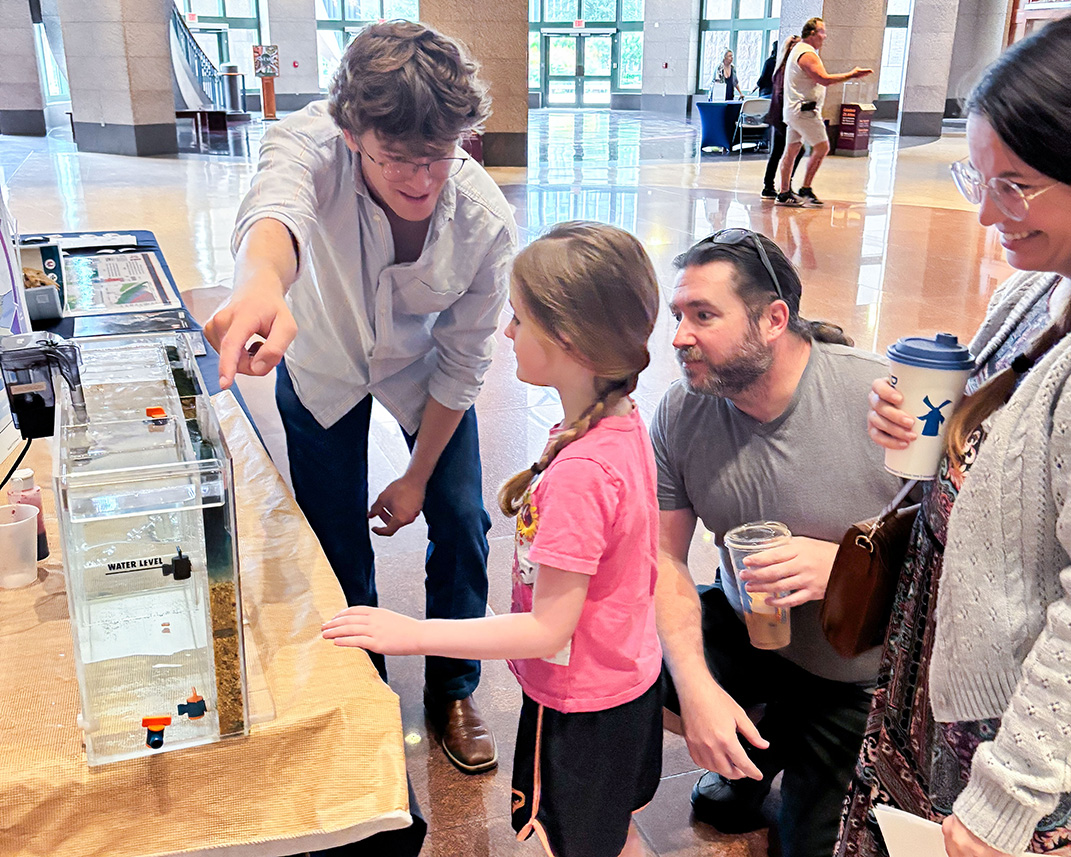
“People often haven’t really considered where their water comes from, or they have misconceptions about how it works,” said Linda Ruiz McCall, the public information geologist at the Bureau and one of the scientists at the event. “Events like these allow us to engage with the public, see what they don’t understand, and help them get a clearer picture of what is actually happening with water in our area."
McCall, along with Mary Eminue, Will Eagle, and Camilla Barreiro, spoke to the curious museum-goers about the water cycle while demonstrating the groundwater model. By putting dye in the model, the different pathways water can take become visible. For example, contaminants on the surface can get into the groundwater, travel many miles, and come out through a well or through spring discharge. The model also shows how the karst limestone that makes up the Austin area can store and move water faster than a sandstone aquifer.
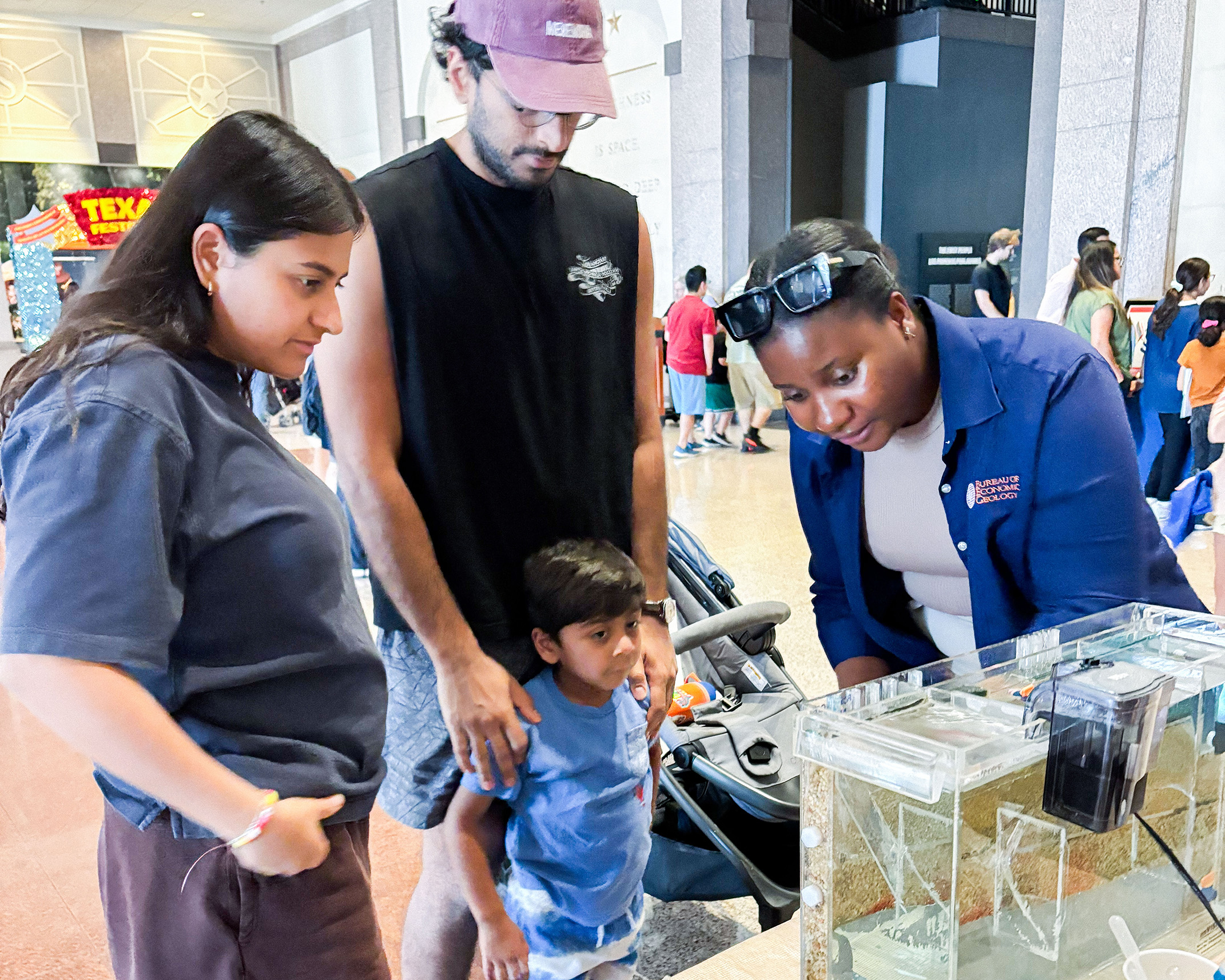
Beyond helping the public understand the science and the importance of conserving and protecting our groundwater resources in Texas, events like these provide useful feedback to the researchers. “It’s like a focus group,” McCall said, “It’s a two-way street: we are giving them information, but we are also learning from them by seeing what they don’t understand and then using that to better direct our efforts in communicating the science.”
As the State Geological Survey of Texas, the Bureau participates in outreach events year round across the state. This year alone, the Bureau has gone to local middle schools, the Lady Bird Johnson Wildflower Center, and Balmorhea State Park, and plans to continue to be out in the public explaining the importance of earth science.
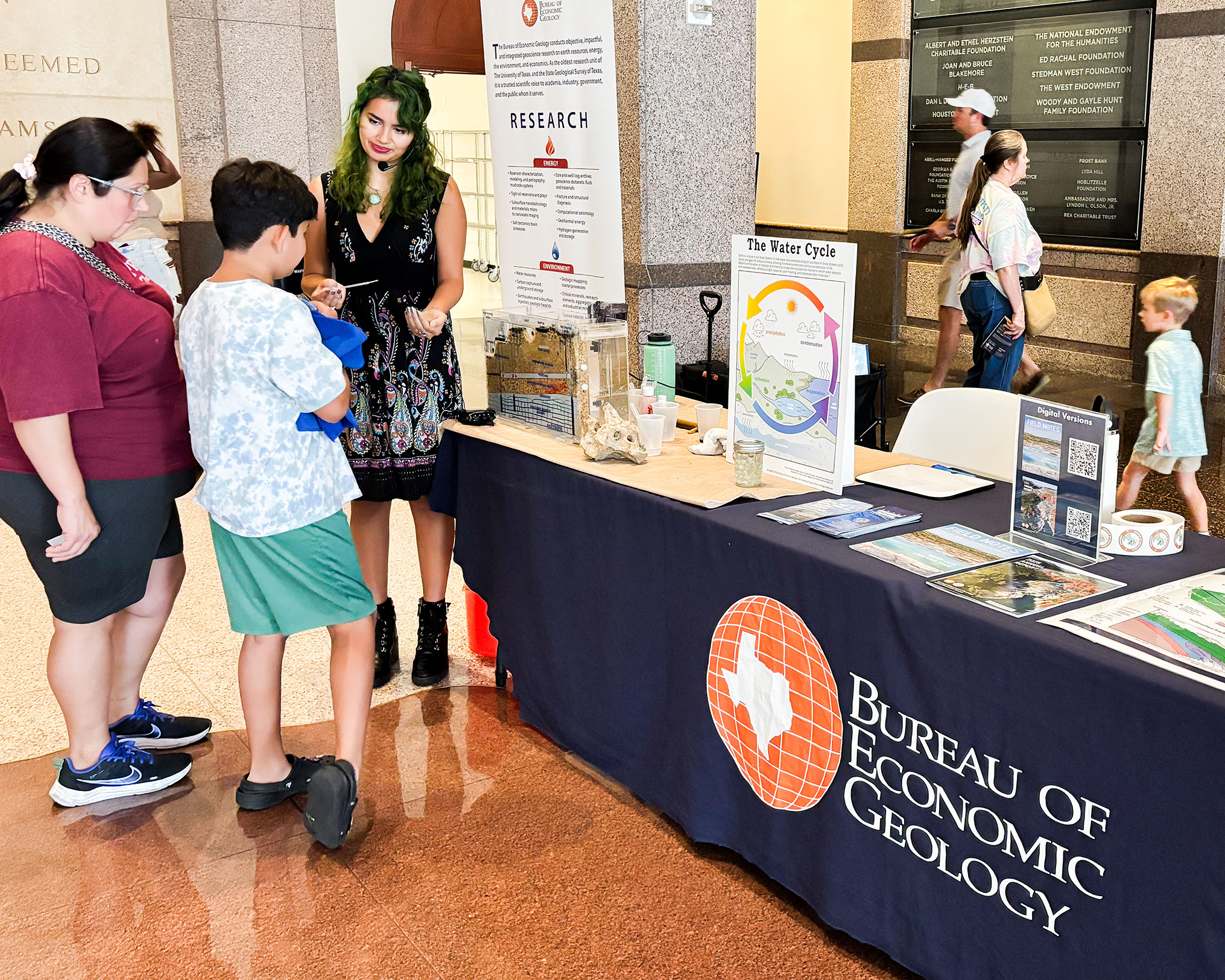
These activities further the educational mission of the Bureau of Economic Geology as part of the Jackson School of Geosciences by extending learning opportunities beyond the University of Texas classroom and making geoscience education more accessible to the general public and Texans statewide.

