
New Sensor Aims to Make Wildfire Fighting Safer
According to NASA research, wildfires have grown more intense, larger, and more frequent over the past two decades, with extreme events more than doubling. The toll is enormous, not only in economic damage, but also in the tragic loss of life, both among victims and the firefighters trying to protect them.
To keep up with the increasing risk posed by wildfires, new technological advances need to be developed and deployed. One such advancement is Fire Thermal InfraRed Spectroscopy (FireTIRS), a thermal imaging system with high spatial and temporal resolution developed by James Thompson, a research assistant professor at the Bureau of Economic Geology, with a $1.3 million grant through the NASA FireSense program.
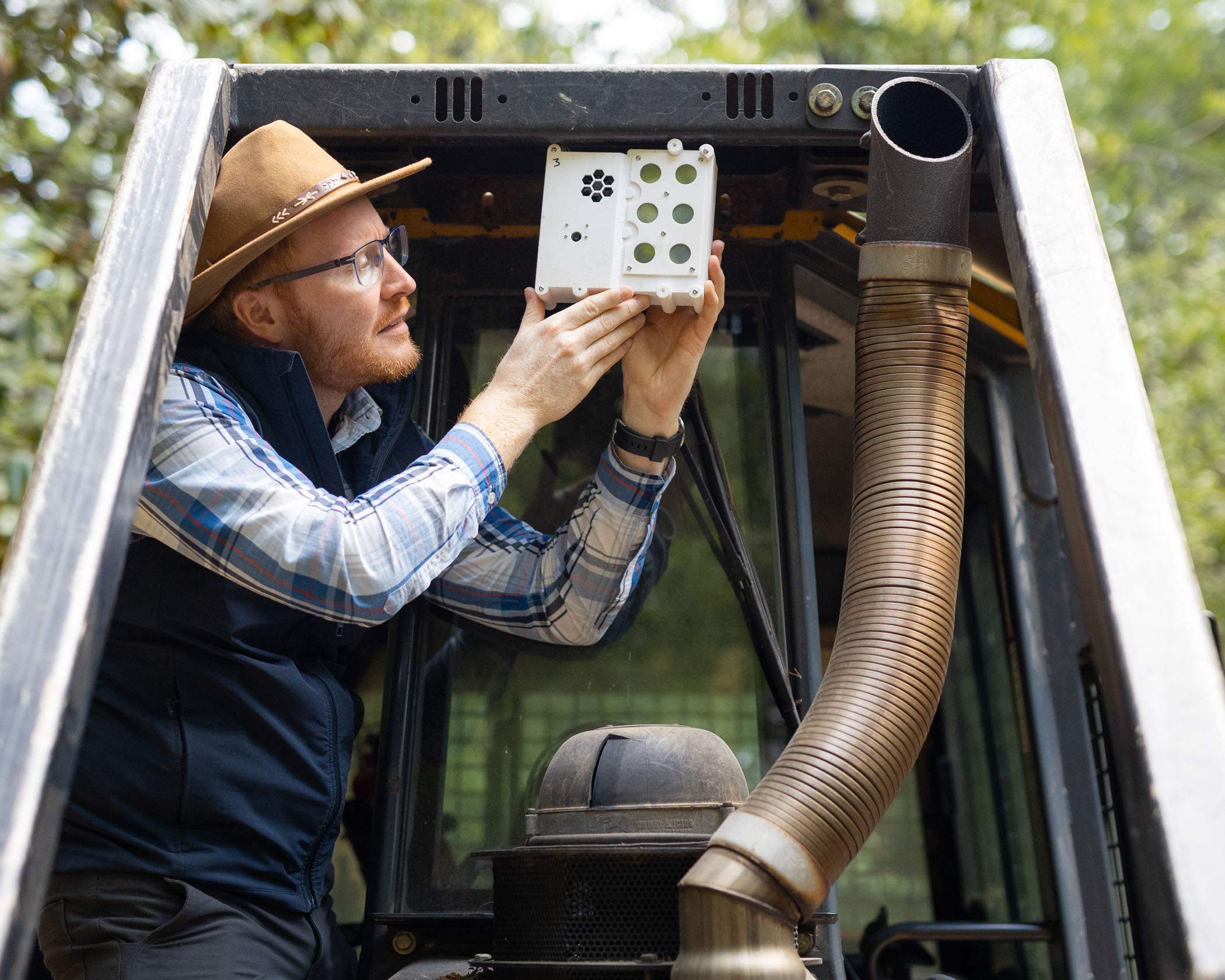
Image Credit: NASA/Milan Loiacono
“The idea is to make a sensor that we can use on both aircraft and bulldozers to provide meaningful data to firefighters. It provides situational awareness to aid firefighter safety while also looking at things like rates of spread, seeing if there are changes in the fire behavior that can give us insights into how to best control the fire,” Thompson said about the FireTIRS sensor.
The sensor does this by taking the infrared spectrum—the wavelengths that tell us the most about heat—and parsing it into smaller segments for analysis. This allows for a more detailed picture of temperature, how heat is moving in the fire, and also emissions from the fire.
The bulldozers used by firefighters to make firebreaks and clear debris currently have little in terms of technology to help with the job. “The visibility in there is pretty limited. The operators are relying on training and experience,” Thompson said, adding, “Recently, two bulldozers were lost when they overheated and turned off due to the proximity to the fire. Fortunately, the firefighters were able to evacuate and get out, but you've lost thousands and thousands of dollars’ worth of equipment and slowed your ability to fight the fire.”
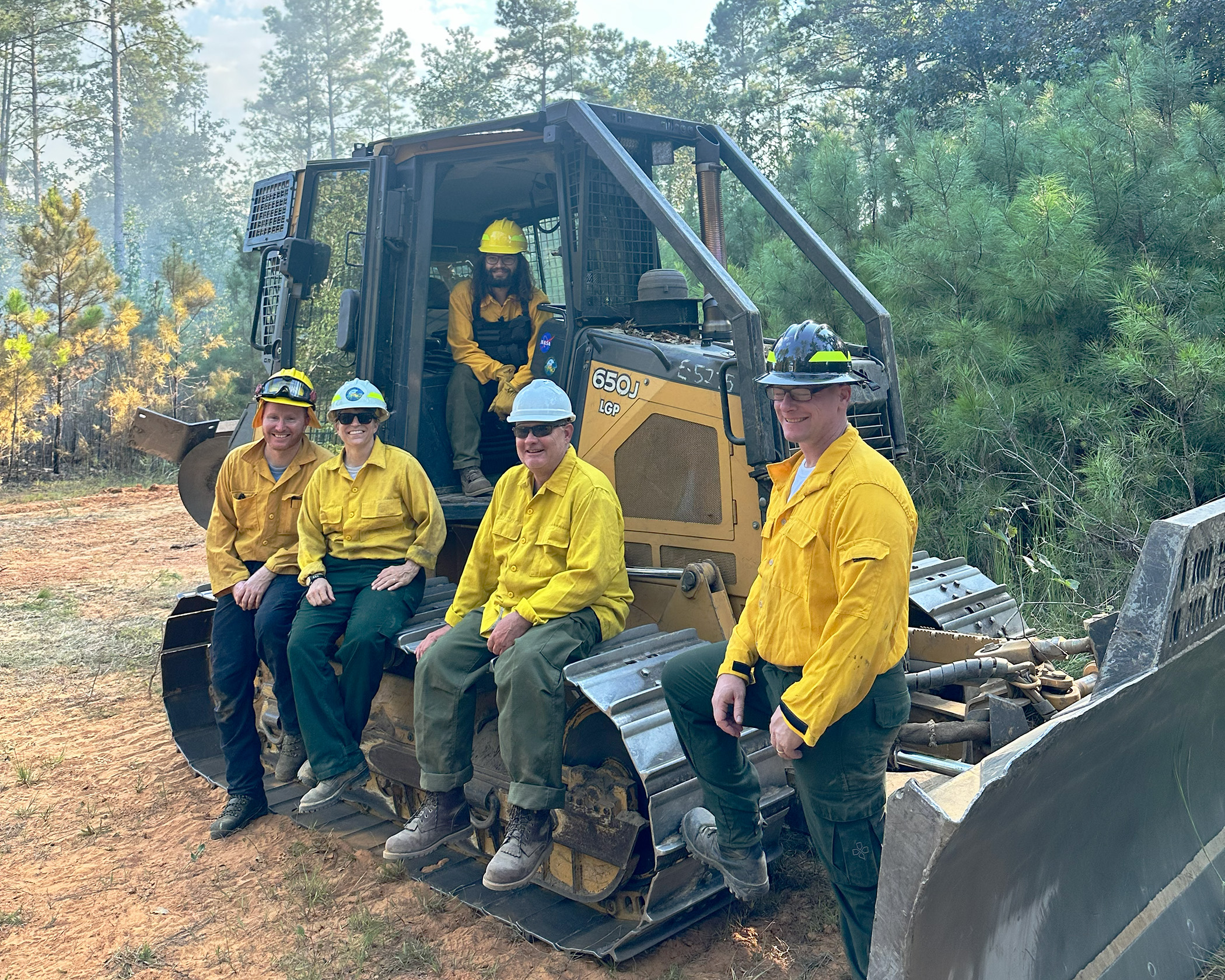
Image Courtesy of James Thompson
Mounting the sensor on bulldozers could give lifesaving information to firefighters by providing real-time feedback to the operators. The sensor will be enhanced with high-temperature thermocouples to provide heat exposure guidance and bulldozer operational conditions. An additional benefit is that having the sensor on the bulldozer will collect information from under the tree canopy, which can then be used to complement airborne and satellite data.
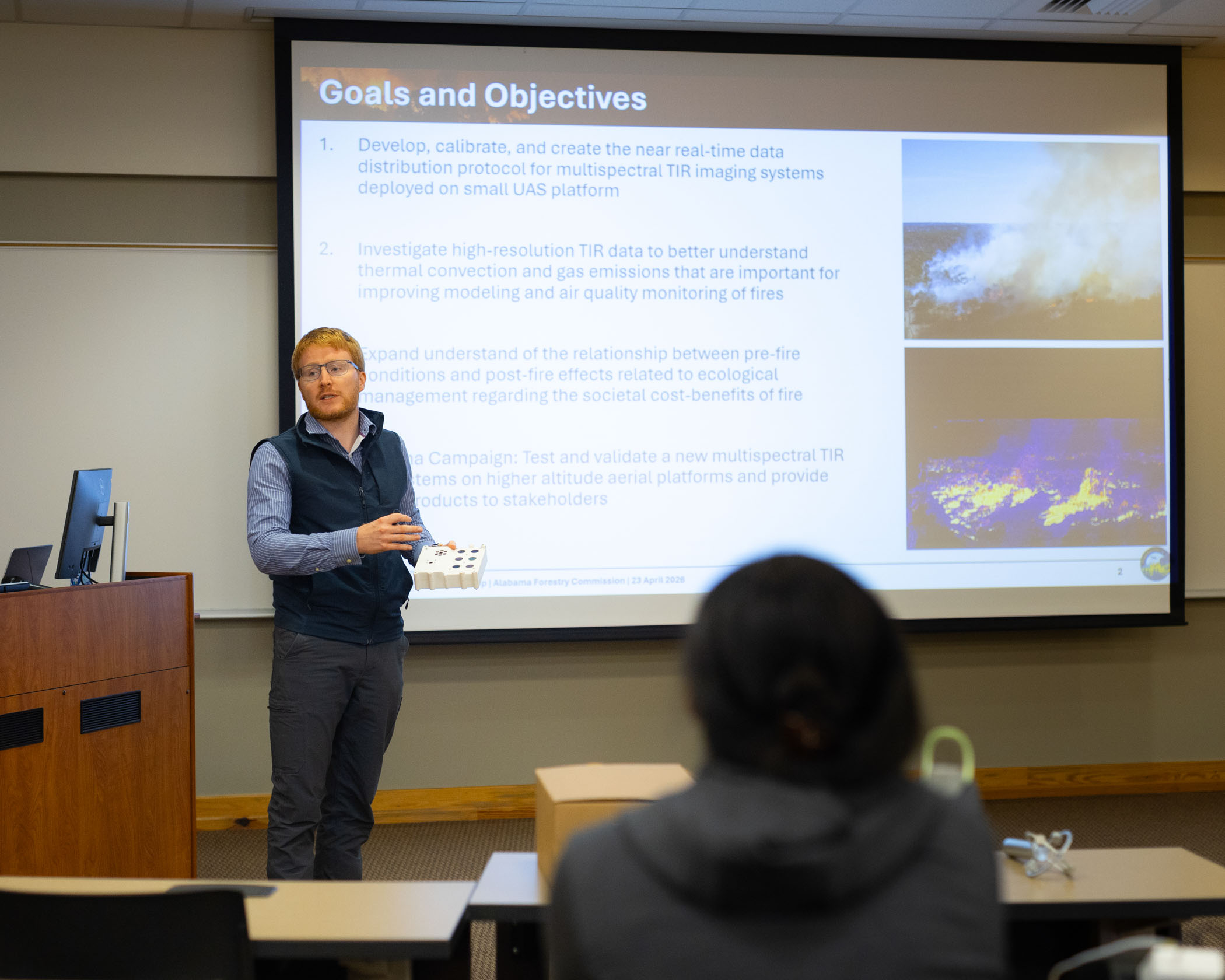
Image Credit: NASA/Milan Loiacono
In September, Thompson traveled to Alabama to begin installing and testing these sensors so they can be used in the 2027 wildfire season. “Fire activity is increasing pretty dramatically across the United States. There's a need for improved resources for firefighters, and hopefully this project will tell us if the FireTIRS sensor can be helpful.”

