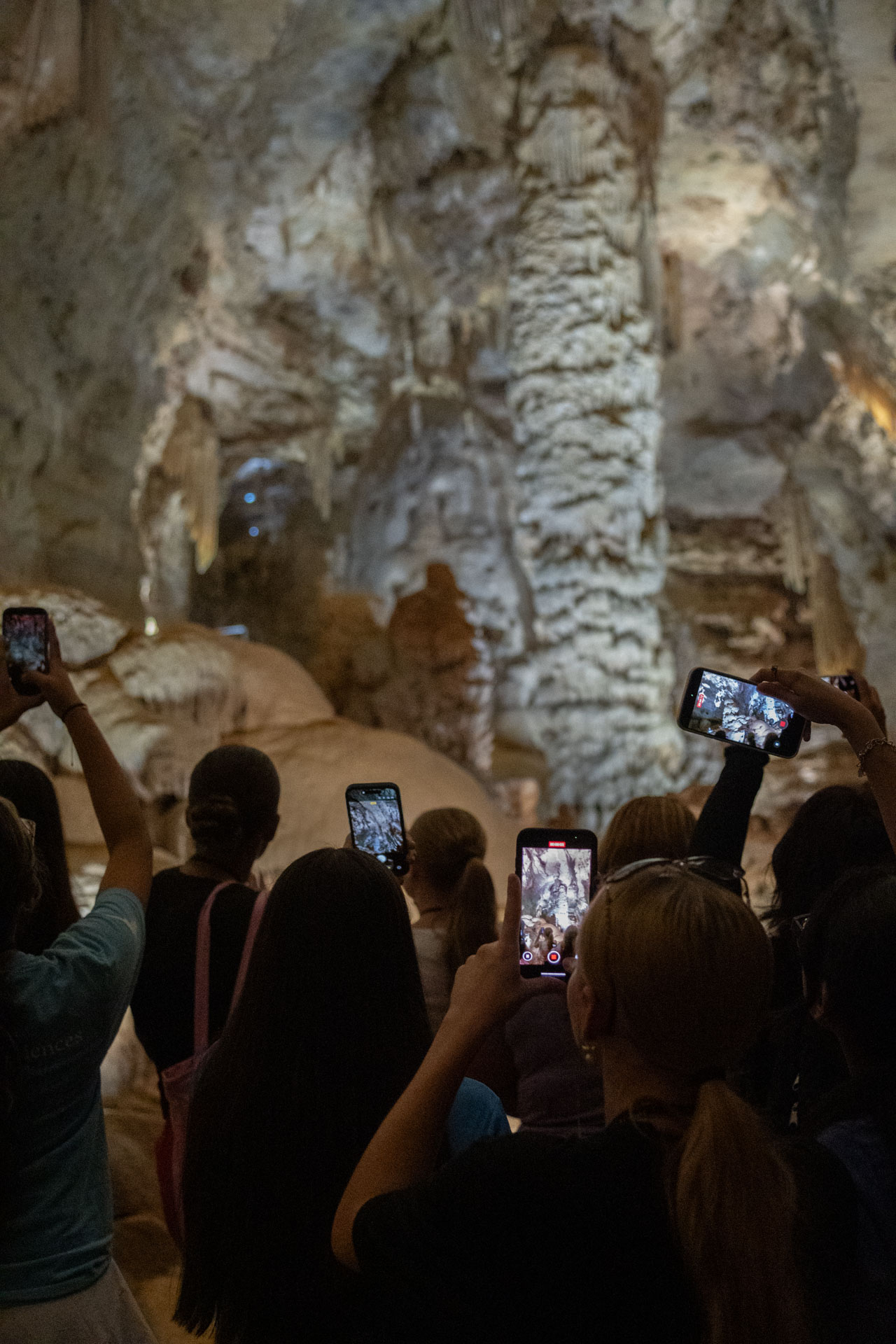
GeoFORCE Students Cap Their Journey at the Bureau of Economic Geology
The GeoFORCE program, now in its 21st year, was created by former Bureau Associate Director Doug Ratcliff as a free education program for high school students across Texas. University faculty, researchers, and other educators take students on geological field trips across the United States. Without GeoFORCE, many of these students wouldn’t otherwise have the resources to take trips like these, or the mentorship to help foster a love of science and encourage careers in STEM.
For the past three summers, groups of students from the program—over 70 students this year—have made their way to the Bureau of Economic Geology for a capstone experience marking the end of their four years in GeoFORCE.
According to Linda Ruiz McCall, one of the group leaders and long-time GeoFORCE collaborator, “The idea for having the students come to the Bureau is really for them to understand and experience geoscience research first-hand. To work with the researchers and see how the different pieces tie together, the field work, work in the lab, and how that work can be communicated to the public.”
The J.J. Pickle research campus, where the Bureau is located, might not have all of the charm of the main campus “40 acres” (actual size: 431 acres) with the Tower, statues, and the hustle and bustle of students, but at 475 acres it’s 44 acres bigger, so there’s that. Also, there’s a supercomputer and a nuclear reactor.
Sure, we have those things, but most importantly we have a remarkable community across the Jackson School of Geosciences. Faculty, researchers, staff, and students from the Bureau of Economic Geology, the Department of Earth and Planetary Sciences, and the University of Texas Institute for Geophysics work together to provide students with a broad and inspiring introduction to the geosciences, demonstrating the power of a unified school working toward a common mission.
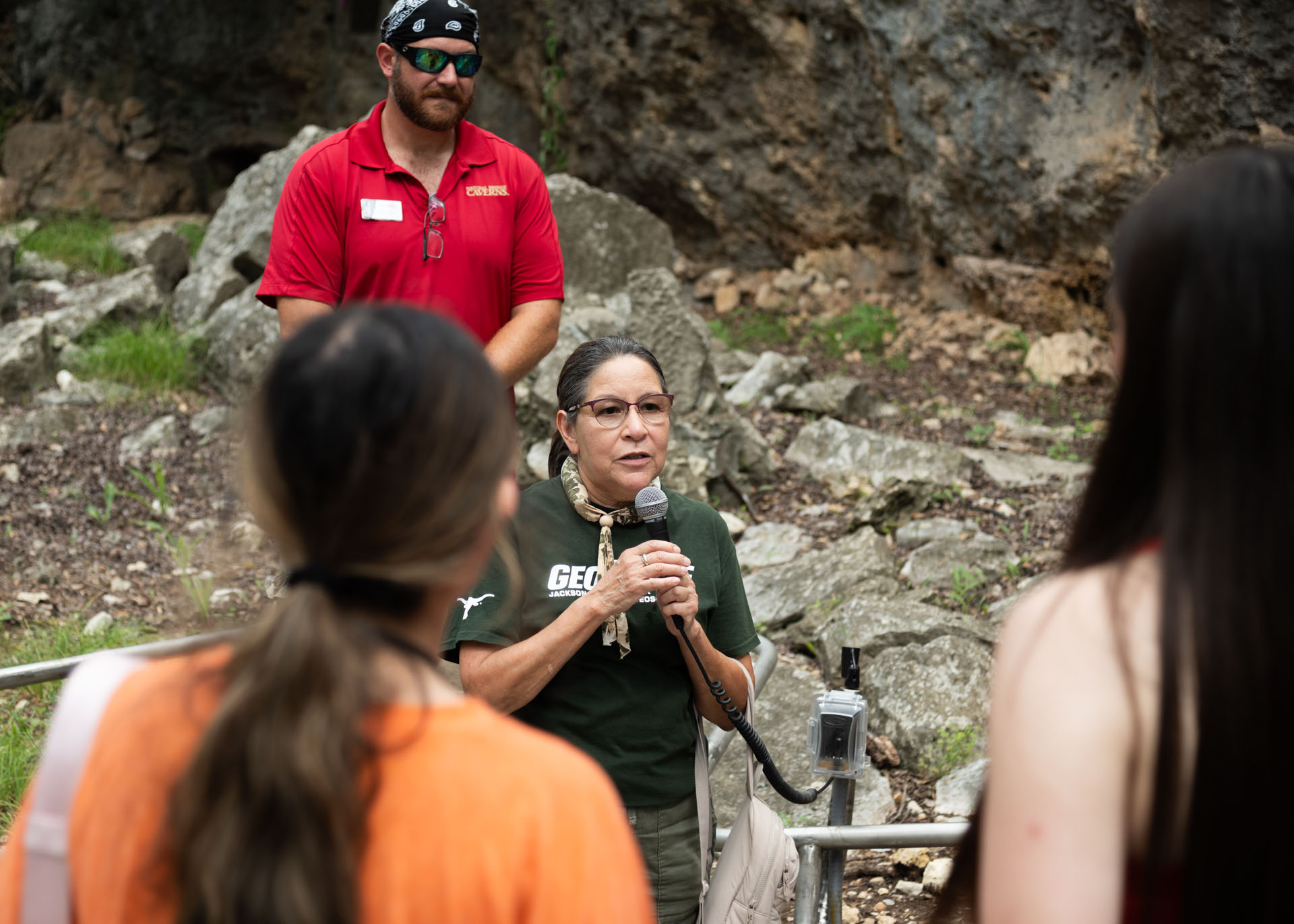
This year groups led by Bureau members Dr. Lucy Ko, Dr. Katherine Romanak, Dr. Hailun Ni, and Linda Ruiz McCall explored different aspects of geoscience: from the subsurface, to carbon storage, to science communication.
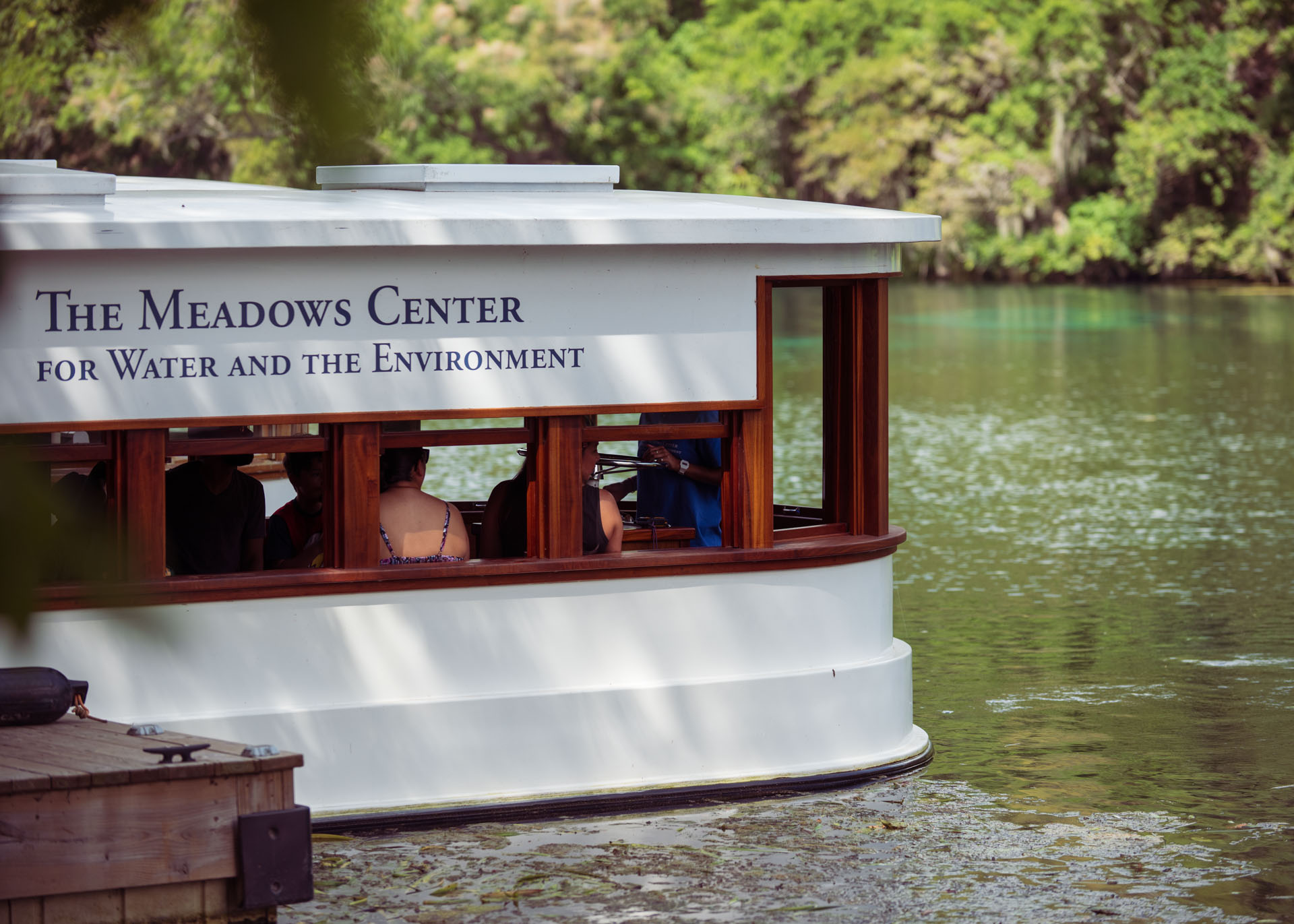
We tagged along with McCall’s group as 16 students boarded a glass-bottom boat at the Meadows Center for Water and the Environment in San Marcos, Texas, to look at San Marcos springs. Peering through the glass floor into the clear water below, the students witnessed the active bubbling of the springs roiling the sediment at the lake bottom with their intensity. Then the students made their way to Natural Bridge Caverns to gaze right into the heart of the same geology that influences the springs in San Marcos. A rare glimpse inside the ways that such large volumes of water can move underground.
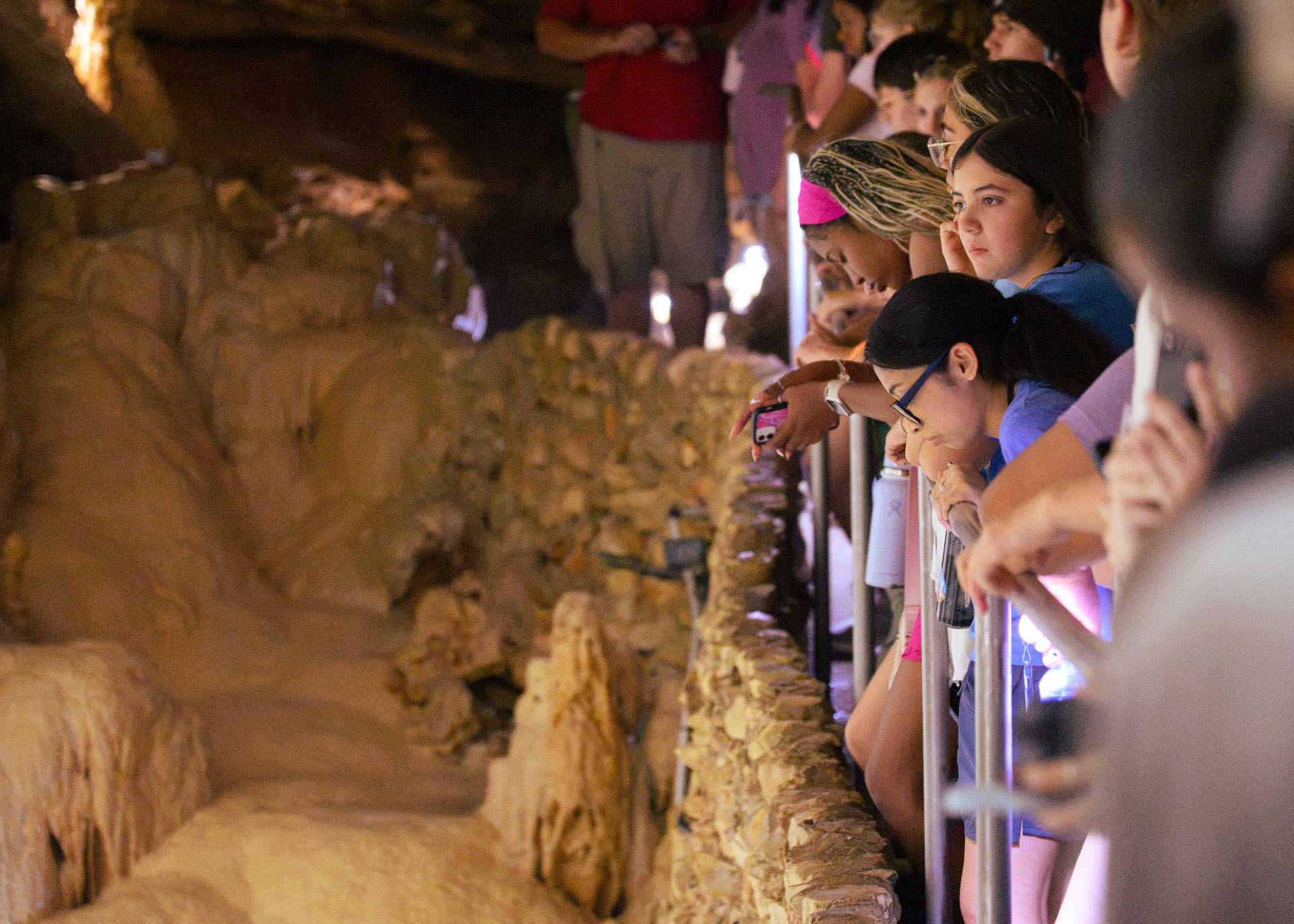
Upon returning to the Bureau, the students used their field experience to help craft educational interpretive signs about springs in Central Texas along the Balcones Escarpment and how they fit into the idea of geoheritage.
At the end of the week, students from all the groups presented their findings to their families, friends, and members of the Jackson School community, sharing the hard work they put in over the last week, and celebrating the distance they’ve traveled, in every sense, over the last four years.